The Main Types of Electric Drills
Corded Electric Drill
A corded electric drill draws power directly from a wall outlet. It delivers consistent, uninterrupted power for as long as you need it — no batteries to charge, no runtime limits, no drop in performance mid-job. This makes corded drills the tool of choice for workshop environments, construction sites with fixed power access, and heavy-duty professional applications. When a contractor needs to drill through concrete walls for hours without stopping, a corded drill is the reliable answer.
From a wholesale perspective, corded drills typically carry lower price points than equivalent cordless electric drills, making them strong sellers in price-sensitive markets and budget retail channels. They’re also simpler to maintain — no battery management, no charger compatibility issues, no platform lock-in concerns for your buyers.
Key buyer segments for corded drills:
- Professional contractors and construction crews
- Workshop-based tradespeople (carpenters, metalworkers)
- Hardware stores targeting professional end-users
- Markets where reliable electricity access is consistent
Cordless Drill / Driver
The cordless drill has become the single highest-turnover SKU in power tool wholesale distribution globally — and for good reason. Powered by rechargeable lithium-ion batteries, cordless drills give users the freedom to work anywhere: on scaffolding, in tight spaces, on job sites without power access, or simply around the house.
Modern cordless drill/drivers combine two functions in one tool: drilling holes and driving screws. Variable torque settings and dual-speed gearboxes make them versatile enough for wood, metal, drywall, and light masonry applications.
For distributors, cordless drills represent the broadest addressable market — from serious DIY homeowners to light tradespeople to small contractors. The shift away from corded tools is well underway in developed markets, and accelerating fast in Southeast Asia, the Middle East, and Latin America.
The one consideration: cordless drills require a battery platform decision. When your catalog standardizes on a single voltage platform (18V or 20V), your buyers can share batteries across drills, grinders, and saws — creating repeat purchases and platform loyalty that benefits your business long-term.
Key buyer segments for cordless drills:
- Hardware supermarkets and retail chains
- E-commerce sellers and cross-border platforms
- Regional distributors building a complete tool catalog
- Construction supply stores and professional tool retailers
Corded vs. Cordless Electric Drills — Which Should You Stock?
This is the question every tool distributor faces when building or expanding a product range. The honest answer: both have a place in a well-structured catalog, but the right balance depends entirely on your market.
Here’s how to think through the decision:
Stock corded drills if your buyers are:
- Professional contractors and tradespeople who use tools all day in fixed locations
- Workshop operators who need continuous high-powered performance
- Price-sensitive markets where lower cost per unit matters more than portability
- Buyers in regions where cordless tools are still seen as a premium upgrade
Stock cordless drills if your buyers are:
- Retail chains serving DIY homeowners and light users
- Construction supply companies whose customers work on-site without fixed power
- E-commerce channels where cordless tools dominate search and sales volume
- Markets in Europe, North America, and the Middle East, where cordless is already the mainstream expectation
The practical recommendation for most distributors: Lead with cordless drills as your core volume driver, and carry a focused selection of corded drills for the professional and workshop segment. This gives you coverage across price tiers and use cases without overextending your inventory.
One more factor: corded and cordless drills don’t compete for the same shelf. A hardware chain can carry both without cannibalizing sales — they serve genuinely different customer needs.
Key Specs to Understand Before You Source Electric Drills
Wattage & RPM — For Corded Drills
For corded electric drills, three numbers matter before you place an order: input wattage, no-load RPM, and AC input voltage.
Wattage: (typically 500W–1,200W for standard models) indicates motor power. Higher wattage means more torque and the ability to drill through harder materials. A 600W–750W drill covers most general-purpose professional and DIY applications — it’s the sweet spot for high-volume wholesale.
RPM: (revolutions per minute) determines drilling speed. Variable speed triggers (0–2,800 RPM is a common range) give users control across different materials. For your buyers, variable speed is a must-have feature — single-speed drills are harder to sell in professional channels.
AC input voltage: is the wall outlet voltage your drill is designed to run on — and it varies by market. This is completely separate from the battery voltage used in cordless drills.
| AC Input Voltage | Markets |
| 220V–240V | Europe, Middle East, Africa, Asia, Australia (the global majority) |
| 110V–120V | USA, Canada, Mexico, Japan, parts of Latin America |
Getting this wrong is one of the most common and costly sourcing mistakes. A 220V drill shipped to a North American buyer is unusable without a voltage converter. Always confirm the target market’s grid standard before ordering, and ensure your supplier’s product specifications clearly state the AC input voltage range. Many modern corded drills support dual voltage (110V–240V) — this is worth specifying if you’re sourcing for multiple markets simultaneously.
Voltage & Battery Capacity — For Cordless Drills
Voltage is the first spec your buyers will ask about. You’ll see three labels in the market — 18V, 20V Max, and 21V Max — but here’s what actually matters: all three refer to the same 5-cell lithium-ion battery platform. 18V reflects the sustained operating voltage under load; 20V and 21V Max reflect peak charge voltage. Real-world performance is equivalent across all three labels.
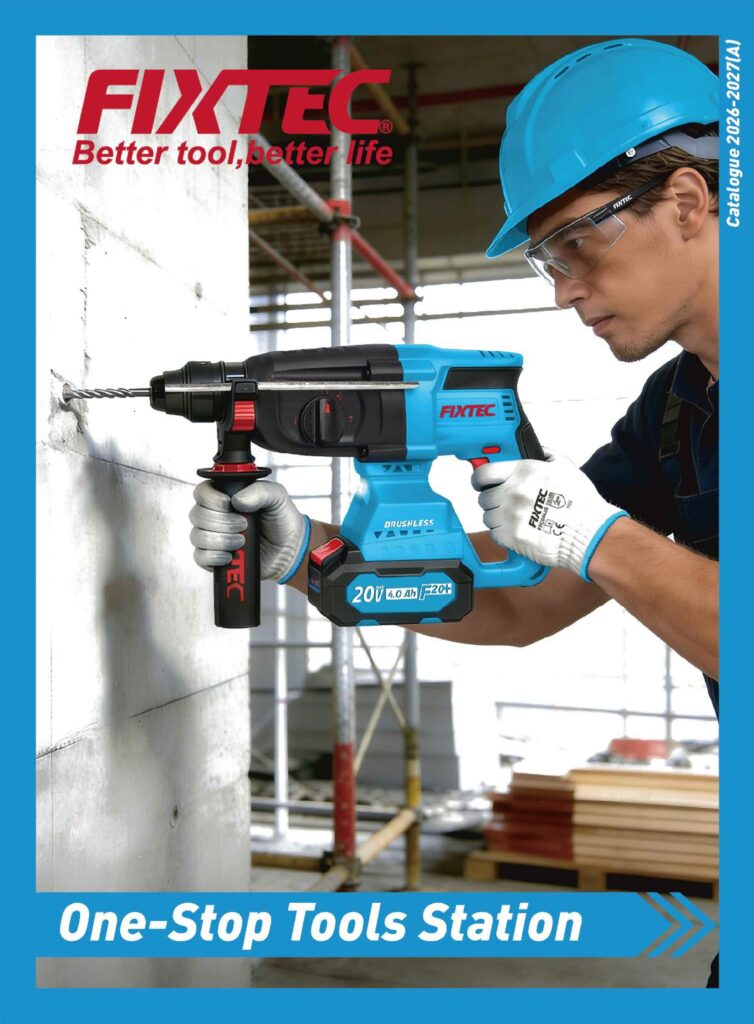
The practical takeaway: match the voltage label to your market’s consumer expectations. Most global markets — including North America, Southeast Asia, the Middle East, and Latin America — are aligned on 20V Max as the mainstream standard. That’s the platform FIXTEC’s cordless drill line is built on.
For lighter applications and compact tool formats, 12V cordless drills offer a lower-cost, lower-weight option well suited to DIY users, homeowners, and markets where portability matters more than raw power.
Battery capacity (measured in Ah — amp hours) determines runtime:
1.5Ah–2.0Ah: Light-duty, compact, lower cost — suits DIY and promotional bundles
2.0Ah–4.0Ah: General professional use — the mainstream wholesale volume range
4.0Ah–5.0Ah+: Heavy-duty, extended runtime — for professional contractors
For most wholesale catalogs, 2.0Ah and 4.0Ah options cover the widest buyer range without over-investing in heavy battery packs.
Chuck Size: 10mm vs 13mm
The chuck is the component that holds the drill bit. Chuck size determines the maximum bit diameter the drill can accept — and it’s a detail buyers notice at the point of sale.
10mm chuck: Lighter, more compact, lower cost. Suits DIY users, light applications, and cordless drills aimed at homeowners.
13mm chuck: Handles larger bits and heavier applications. Standard for professional-grade corded and cordless drills.
For a wholesale catalog targeting professional users or hardware store buyers, 13mm is the safer default choice — it covers everything a 10mm can do, plus more. Reserve 10mm for specifically compact or budget-positioned models.
Brushless vs. Brushed Motor
This is one of the most commercially significant specs in the cordless drill market right now — and the gap between the two technologies is widening.
Brushed motors use carbon brushes to transfer electrical current. They’re lower cost to manufacture, but they generate more heat, wear down faster, and deliver less power efficiency from the same battery. Brushed drills still dominate the entry-level and budget segments.
Brushless motors eliminate the physical brush-commutator contact entirely. The result is:
15–20% more torque efficiency from the same voltage platform
Longer tool lifespan— fewer components to wear out
Less heat— important for sustained professional use
Lower warranty return rates— a direct benefit to your after-sales cost
Brushless drills command a 20–40% price premium over brushed models in the same power class — which means stronger margins for you and a clear upgrade story to tell your retail buyers.
The market is moving toward brushless in the mid and professional tiers. In developed markets, brushless is already the expectation for anything beyond basic DIY. In emerging markets, the shift is accelerating.
Sourcing recommendation: Stock brushless models as your mid-tier and professional range. Carry brushed models for entry-level price points and promotional bundles only.
Certifications: CE / GS / UL / ETL
Certifications aren’t just paperwork — they determine whether your product can legally enter a market and whether your retail buyers will accept it on their shelves.
| Certification | Market | What It Signals |
| CE | Europe (mandatory) | Meets EU safety, EMC, and product directive requirements |
| GS | Germany / Europe (voluntary) | Third-party verified safety — required by German retail chains and premium European channels |
| RoHS | Global / EU | Restriction of hazardous substances — increasingly required across markets |
| UL | USA | Electrical safety standard recognized by US retailers and distributors |
| ETL | USA & Canada | Intertek-issued, equivalent to UL — widely accepted across North American channels |
What this means in practice:
- Selling into European retail without CE is not possible. GS gives you access to premium German and Austrian channels that CE alone won’t open.
- Selling into US or Canadian distribution without UL or ETL certification will close the door with serious retail partners.
- A supplier who can provide CE + GS + RoHS + UL + ETL gives you flexibility to serve multiple markets from a single product line — reducing your sourcing complexity significantly.
Always request certificate copies before placing a bulk order. Certificates should be current, issued by recognized testing bodies, and product-model specific.
How to Match Drill Types to Your Target Market
European Market
Europe is a CE and GS-driven market with high quality expectations across both professional and retail channels
- Cordless drills (20V Max) are the dominant category — 18V nominal and 20V Max are the same battery platform, both widely stocked across European markets. Brushless models are increasingly expected in professional and mid-tier channels.
- Corded drills remain relevant in professional workshop and construction segments, particularly in Eastern Europe where price sensitivity is higher.
- Germany, France, and the UK demand GS certification for access to national hardware chains. CE alone won’t get you into premium retail.
- Focus on: 13mm chuck, brushless cordless drills at 20V Max, CE + GS + RoHS certified, with professional-grade packaging.
North American Market
The US and Canadian market runs on 20V Max branding and is heavily contractor- and professional-user-driven.
- UL or ETL certification is non-negotiable for any serious retail or distribution partnership.
- Brushless cordless drills at 20V Max dominate. Corded drills serve the workshop and heavy-duty professional segment.
- Combo kits(drill + battery + charger, or multi-tool bundles) perform strongly in North American retail — buyers want a complete solution.
- Focus on: 20V Max brushless cordless drills, UL/ETL certified, with 2.0Ah and 4.0Ah battery options.
Middle East & Developing Markets
- 21V Max cordless drills are the mainstream volume product. Price-to-performance ratio is the primary buying criterion.
- Corded drills remain strong in markets where battery management is a concern or where job sites have consistent power access.
- CE certification is widely accepted as baseline compliance across Middle Eastern markets.
- Entry-level to mid-tier products with brushed motors still have significant volume here, though brushless is gaining ground in urban professional segments.
- Focus on: mixed range of corded and 21V Max cordless drills, CE certified, with competitive price positioning.
Retail Chains vs. Professional Contractors
Beyond geography, your channel type shapes your product selection just as much as your region.
Hardware retail chains need:
- Products that are visually appealing and easy to merchandise
- Clear feature differentiation across price tiers (entry / mid / pro)
- Marketing support — product images, packaging, promotional materials
- Consistent stock availability for replenishment orders
Professional contractor supply channels need:
- Higher-spec brushless cordless drills with proven durability
- Certifications relevant to their market’s requirements
- Spare parts availability and reliable after-sales support
- Faster delivery cycles for urgent reorders
If your buyers span both channels, structure your catalog with a clear product ladder: a budget brushed cordless drill at the entry level, a brushless mid-range model as the volume driver, and a professional brushless with extended battery as the premium option.
What to Look for in a Reliable Electric Drill Supplier
Your product quality is only as good as your supplier’s systems. When evaluating a wholesale electric drill supplier, these are the criteria that separate reliable long-term partners from one-order risks.
Certifications — verify, don’t assume
Ask for copies of CE, GS, UL, and ETL certificates for the specific models you’re ordering. A trustworthy supplier provides these without hesitation. Vague answers about “in progress” or “available on request after payment” are red flags.
Quality control process
One end-of-line inspection is the minimum — but it’s not enough. Look for suppliers who operate a multi-layer QC system: incoming material inspection before production starts, in-line quality checks during manufacturing, and a final pre-shipment inspection on every batch. This structure catches defects at the source rather than after they’ve been produced and packed.
Ready stock and delivery speed
When your retail customer needs an urgent reorder, a 4–6 week production lead time is a business problem. Suppliers with warehouse-held ready stock give you the ability to respond to market demand in days, not weeks. Ask specifically about stock depth on the models you plan to carry regularly.
MOQ flexibility
If you’re entering a new market or testing a new product line, being forced into a 1,000-piece minimum is a cash-flow risk you don’t need. The best suppliers offer small MOQ options from 1 carton, letting you validate demand before committing to full container quantities.
Spare parts and after-sales support
The drill you sell today will need a carbon brush replacement in 18 months. Does your supplier stock spare parts? Do they include a buffer supply with bulk orders? A supplier who provides 1% free spare parts with every bulk order lets you resolve minor field issues locally — without waiting for international shipments or absorbing the cost yourself.
OEM and private label capability
If you’re building your own brand or need market-specific packaging, OEM flexibility is a significant advantage. Look for suppliers who can customize color, logo, packaging, and function without requiring massive minimum orders to get started.
At FIXTEC, we’re a electric drill manufacturer in China with over two decades of export experience, supplying corded and cordless electric drills with CE, GS, RoHS, UL, and ETL certifications — covering European, North American, and global markets from a single supplier relationship. Our fully automatic brushless motor production line and battery assembly line give us tight quality control over the components that matter most. MOQ starts from 1 carton, ready stock ships in 5–7 business days, and every bulk order includes 1% free spare parts as standard.
Conclusion
Corded or cordless, 20V or 12V, brushless or brushed electric drills— the right answer depends entirely on who your end customer is and what market you’re serving. Get that match right, and your electric drill inventory sells itself. Get it wrong, and you’re sitting on the wrong stock in the wrong region.
If you’re ready to source from a trusted wholesale electric drill supplier with full certification coverage and flexible MOQ — contact FIXTEC today and let’s build your product line together.
FAQ
1. What is the difference between a drill and an impact driver?
A standard cordless drill is designed for drilling holes and driving screws with adjustable torque control — it’s the versatile everyday tool for wood, metal, and light masonry. An impact driver delivers rotational bursts of high torque specifically for driving long screws and fasteners into hard materials. For most wholesale catalogs, drills are the higher-volume product; impact drivers serve the professional and contractor segment as a complementary tool.
2.How long does a cordless drill battery last?
Battery lifespan depends on capacity (Ah) and usage intensity. A 2.0Ah battery typically delivers 30–60 minutes of continuous use for light to moderate tasks; a 4.0Ah pack roughly doubles that. Over charge cycles, lithium-ion batteries generally retain usable capacity for 2–3 years under regular professional use. For your buyers, offering both battery sizes gives entry-level and professional customers a clear upgrade path.
3.What drill RPM do I need for different materials?
Wood: 1,500–3,000 RPM — higher speed, lower torque
Metal: 300–1,000 RPM — slower speed to prevent overheating
Concrete/masonry: requires hammer function, typically 0–1,200 RPM
Variable speed triggers (standard on most modern corded and cordless drills) let users adjust on the fly — this is a selling point worth highlighting in your product listings.
4.How do I verify a Chinese electric drill supplier before placing a bulk order?
Request product-specific certification documents (CE, GS, UL, ETL) — not generic company certificates. Ask for a factory audit report or third-party inspection results. Check reference clients, especially any recognizable retail chains. Order a sample batch before committing to container quantities, and confirm spare parts availability and after-sales process in writing. A reliable electric drill manufacturer in China will have no hesitation providing all of the above upfront.